Skip links

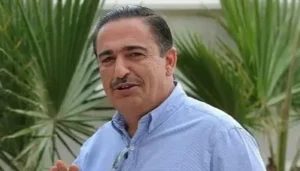
Ahmed Nejib Chebbi on Hunger Strike In Protest Against Information Blackout and Censorship in Prison

October 1, 2026 – Status Update – Political prisoner Ahmed Nejib Chebbi began an open-ended hunger strike on Thursday morning in protest against the policy of information blackout and censorship imposed inside the prison, the denial of prisoners’ access to credible and independent news sources, and the restriction of available media to newspapers and television channels that provide only “propaganda” and promote the authorities’ narrative of events.

Chebbi’s family stated that these restrictions have isolated detainees from sources of information and prevented them from following political, social and economic developments in the country. The family considers that censorship of the news and media accessible to prisoners has become an integral part of their conditions of detention and their isolation from the outside world.

According to his family, Ahmed Nejib Chebbi declared upon deciding to begin his hunger strike:
“I would rather die with dignity than live without it.”

Position of the Freedom for Tunisia Observatory

The Freedom for Tunisia Observatory expresses its grave concern over the decision of Ahmed Nejib Chebbi (82) to begin an open-ended hunger strike. It rejects the imposition of information blackouts or media censorship on prisoners that deprive them of access to news from multiple sources and restrict the information available to them to media outlets selected by the prison administration.

The Observatory emphasises that depriving a person of their liberty does not justify imposing information isolation or severing their connection to developments taking place outside the prison.

Rule 63 of the United Nations Nelson Mandela Rules provides that:
“Prisoners shall be kept informed regularly of the more important items of news by the reading of newspapers, periodicals or special institutional publications, by hearing wireless transmissions, by lectures or by any similar means as authorized or controlled by the prison administration.”

The Observatory stresses that this provision recognises prisoners’ right to remain informed about developments beyond prison walls. While it allows prison administrations to regulate the means through which information is provided, it must not be interpreted as permitting arbitrary censorship or the systematic exclusion of independent news sources.

The Observatory considers that information blackouts and selective censorship of news sources, which isolate prisoners from information and restrict their access to one-sided, controlled content, are incompatible with the purpose of this international safeguard.

It further emphasises that any restrictions on prisoners’ access to news must be based on lawful and legitimate grounds, be necessary and proportionate to the requirements of security and prison administration, and must not become instruments of pressure and isolation or a means of imposing blanket censorship and politically selecting the media sources prisoners are permitted to access.

The Observatory also expresses grave concern for Ahmed Nejib Chebbi’s safety, given his age, his health condition and the deterioration of his health during his detention in the past. It considers his decision to begin an open-ended hunger strike a development requiring an urgent response to his demands and careful, regular monitoring of his health.

The Freedom for Tunisia Observatory condemns the fact that a detainee has been driven to risk his health in order to demand basic rights within prison. It calls for an end to information blackouts, censorship and unjustified restrictions on prisoners’ right to access news, and for prisoners to be granted access to a plurality of newspapers, television channels and diverse media sources, ensuring that they are neither isolated from society and the outside world nor restricted to a single media narrative.
Share

More Posts

Call to Action

Website petition: Freedom for prisoners of conscience and activists in Tunisia!

Tunisia is no longer the Arab exception that inspired the world in 2011 with a heroic revolution that overthrew the rule of Zine El Abidine Ben Ali, who ruled for nearly 23 years after seizing power on November 7, 1987, in a coup against Habib Bourguiba.

In a similar and perhaps more dangerous move, on the night of July 25, 2021, Tunisian President Kais Saied carried out a “constitutional coup” in accordance with his personal interpretation of Article 80 of the 2014 Revolutionary Constitution, announcing that he had taken a set of exceptional measures due to the “imminent danger” that threatens Tunisia without providing any details or reasons.

In accordance with these measures, Saied dismissed the government and the prime minister Hichem Mechichi who was present at the National Security Council that night at the Carthage Palace, and claimed that he had contacted the Speaker of Parliament Rached Ghannouchi (leader of the Ennahdha party) to consult with him in accordance with what is stipulated by the constitution, a claim which Ghannouchi denied since the call was general and did not include anything about exceptional measures or any consultation on the matter. The president suspended Parliament and later dissolved it in March 2022.

Not only did Saied seek to bypass his powers and the articles of the Constitution, which he swore to protect before the Assembly of the Representatives of the People, but he went on to dismiss and change the composition of the Supreme Judicial Council after redefining the judiciary it as a “function” rather than an independent authority. He further replaced members of the Supreme Electoral Commission in preparation for the referendum he held in order to vote on a constitution that he wrote himself after dismissing the proposals of the drafting committee he had himself appointed. Then legislative elections were held over two rounds, in which the participation rate did not exceed 8% of the total number of voters, with the Election Commission later announcing that it had reached 11%, which is the lowest participation rate in Tunisia and globally.

On February 11, President Saied’s regime launched a campaign of protests that has not stopped since, against political leaders, media figures, journalists, judges and senior officials and civil servants, for charges of “conspiring against the security of the state and committing an offensive act against the President of the Republic,” in addition to other charges that were referred to the military prosecution, leading one to wonder about the implication of the Tunisian army in the actions taken by Saied.

The arbitrary arrests were marred by several procedural violations amid criticism from prominent international organizations and observatories in the field of human rights. The standards of litigation and detention period and conditions were not respected. Prosecution and harassment sometimes extended to the detainees’ families, and no evidence, and in many cases, no charges against them were presented.

Moreover trade unions and political parties continue to be subjected to constant harassment and restrictions. Saied continues to target all “intermediary bodies” accusing them of “collaboration” or “treason”. Civil society associations have also been subjected to prosecution, arbitrary arrests and deprivation from representation, in a context of of increasing violence in society due to the authorities’ adoption of racist and discriminatory speeches and rhetoric inciting infighting and violating human dignity.

In light of the above, we, the undersigned, demand the following:

Call for the immediate release of all political detainees, immediately and unconditionally. We also urge the Tunisian authorities to recognize the national and the international human rights treaties they have ratified.
Call on the Tunisian authorities to stop dismantling the nascent democracy and put an end to unfair trials and prosecutions against political opponents of the regime and anyone who criticises it.
Call on all activists and observers to join the national movement for restoring democracy and ending authoritarian rule that has taken Tunisia back to despotism, injustice, and violations of rights and freedoms.