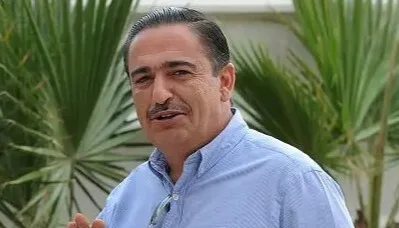
November 6, 2026 – The Criminal Chamber specialising in terrorism cases at the Tunis Court of Appeal has decided to adjourn proceedings in the case known as “Placing Oneself at the Disposal of a Foreign Army in Peacetime”, involving businessman Chafik Jarraya, a former security official and several foreign defendants, until November 16, 2026.
On March 24, 2026, the Criminal Chamber specialising in terrorism cases at the Tunis Court of First Instance sentenced Chafik Jarraya to 15 years in prison. A former security official received a five-year prison sentence, while five defendants tried in absentia, including foreign nationals, were sentenced to 25 years in prison with immediate enforcement.
Chafik Jarraya remains in detention in connection with this case, while the Court of Appeal is currently examining the appeal against the first-instance judgment.
Contacts That Began with Information About Tunisians in Libya
The events underlying the case date back to 2016, when Chafik Jarraya contacted Imed Achour, the former Director-General of Specialised Services at the Ministry of the Interior, informing him that a Libyan national named Walid Koshlaf possessed information relating to Tunisia’s national security.
According to information contained in the case file, the intelligence concerned Tunisians present in Libya who were suspected of involvement in terrorism-related offences. A meeting involving Tunisian security officials was subsequently arranged.
The initial investigations involved former security and political officials, including Saber Ajili and Mohamed Najem Gharsalli, before the legal status of several individuals changed during the course of the investigation.
From the outset, the case raised disagreements over the nature of these contacts and whether they constituted the transmission of security-related information to the Tunisian authorities or acts that could be legally classified as offences against state security and placing oneself at the disposal of a foreign entity.
Abdelhakim Belhaj Among Those Referred for Trial in Absentia
The case also involved Libyan individuals, including Libyan politician Abdelhakim Belhaj, whose name appeared among the defendants referred for trial in absentia.
Walid Koshlaf’s name also featured in investigations concerning the contacts preceding the opening of the case, as the individual reportedly possessing security-related information about Tunisians present in Libya.
The charges in the case are not limited to “placing oneself at the disposal of a foreign army in peacetime”. They also include offences relating to attacks against the external security of the state and terrorism-related crimes.
Continuous Detention Since May 2017
Chafik Jarraya has been imprisoned since May 2017, more than nine years ago, following the initiation of proceedings against him during a wave of arrests targeting several businesspeople in 2017.
The present case initially began before the military courts before passing through several judicial stages and ultimately being referred to the judiciary specialising in terrorism cases.
At one stage in the proceedings, a judicial decision ordering Jarraya’s release was issued, but it was subsequently challenged and overturned, resulting in his continued detention.
Jarraya has therefore spent more than nine years in prison while continuing to face proceedings in multiple cases at different stages of the judicial process.
Prison Sentences Totalling More Than 40 Years
In addition to the first-instance sentence of 15 years in prison in the case concerning “placing oneself at the disposal of a foreign army”, Chafik Jarraya has received other sentences in separate financial and property-related cases.
Among the most significant are a total of 16 years in prison imposed on appeal in four cases concerning contracts for the sale of confiscated properties, as well as a total of four years in prison on appeal in a series of cases involving the management of company funds. The first instance sentences in the latter cases had originally totalled 101 years.
He also received a two-year prison sentence on appeal in a case involving a building in the Berges du Lac district, alongside other judgments in tax, customs and financial cases.
Taking into account the reported judgments in the most prominent of these cases, the prison sentences imposed on Chafik Jarraya exceed 40 years in total, although the cases differ in nature and are at different stages of judicial proceedings.
Position of the Freedom for Tunisia Observatory
The Freedom for Tunisia Observatory expresses its grave concern over Chafik Jarraya’s continued detention since May 2017 and the numerous cases and judgments against him. His legal situation has now extended over more than nine years, raising serious questions about the right to trial within a reasonable time, legal clarity and legal certainty.
The Observatory considers that the case concerning “placing oneself at the disposal of a foreign army” requires precise identification of the acts personally committed by Jarraya, particularly since the original circumstances involve contacts reportedly intended to convey information about Tunisians present in Libya to Tunisian security officials.
The Observatory emphasises that the seriousness of charges relating to state security and terrorism requires proof of specific criminal acts and the corresponding criminal intent. A clear distinction must be made between transmitting information or engaging in security-related or political contacts and acts that genuinely constitute placing oneself at the disposal of a foreign army or an offence against state security.
The Observatory also expresses concern that the prolonged detention of Chafik Jarraya and the numerous judicial proceedings against him could create a situation in which he becomes vulnerable to pressure, bargaining or manipulation in pursuit of political agendas or interests unrelated to the judicial process itself.
The Observatory stresses that any contact or dealings with Jarraya must remain governed by law and subject to judicial oversight. His legal situation and the multiplicity of cases against him must not become a means of influencing his positions, statements, or political and economic relationships.
The Observatory further emphasises that combating corruption and serious crime does not justify keeping individuals in a prolonged state of unresolved judicial proceedings for many years. Justice requires the final resolution of cases within reasonable timeframes, while guaranteeing defence rights, the right to appeal and effective judicial review.
The Freedom for Tunisia Observatory Calls For:
- The expeditious conclusion of the appeal proceedings in the case concerning “placing oneself at the disposal of a foreign army”, with a genuine review of the evidence and facts underlying the first-instance judgment.
- Precise identification of the material acts individually attributed to Chafik Jarraya and clarification of the legal basis for classifying them as offences against state security or terrorism-related crimes.
- A reassessment of Chafik Jarraya’s continued detention in light of his imprisonment for more than nine years, allowing him to pursue legal proceedings while at liberty whenever no specific legal grounds justify his continued imprisonment.
- The prompt and final resolution of the remaining cases against him, bringing an end to a prolonged state of unresolved judicial proceedings extending over many years.
- Guarantees that Chafik Jarraya’s legal situation will not be exploited to pressure him, influence his positions or statements, or compel him to serve any political, economic or financial agenda, together with investigations into any credible allegations of pressure or bargaining connected to his judicial cases.
- Complete separation between the various cases and judgments against him, ensuring that a conviction in one case is not treated as a presumption of guilt or responsibility in another.
- Guarantees that all defendants in the case receive a fair and independent trial, with a genuine opportunity to examine and challenge evidence, witness testimony and expert reports before the courts.