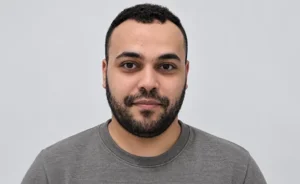

September 5, 2026 – University student Alaaeddine Abdelkader, 24, has died after being transferred from Mornaguia Civil Prison to Charles Nicolle Hospital in a comatose state. He had been in pretrial detention for approximately four months, during which he was subjected to harsh detention conditions—characterized by extreme heat, overcrowding, and water shortages—despite suffering from respiratory issues and the prison administration’s awareness of his health condition.
Alaaeddine was a second-year Masters student in English Translation and was his mother’s only son. He had been detained following an altercation with another individual and remained in pretrial detention pending the completion of investigations and judicial proceedings.
According to his family, Alaaeddine maintained his innocence from the outset and was awaiting a formal cross examination with the other party involved. However, this cross examination never took place during his four months in prison; his detention ended with his death, without a verdict ever having been issued regarding the merits of the case.
Harsh Detention Conditions and Deteriorating Health:
Alaaeddine suffered from respiratory difficulties. Although the prison administration was aware of his medical history, he was kept in a severely overcrowded cell during a period of intense heatwaves and water shortages within the facility.
During his final visit on Wednesday, August 26, 2026, he spoke to his family about the extreme heat, overcrowding, and lack of water; he was also suffering from a skin rash on his neck that made it difficult for him to sleep. Around 10:00 PM on Thursday, August 27, Alaaeddine was transported to Charles Nicolle Hospital in a comatose state; he passed away around 1:00 AM on Friday, August 28.
His family maintains that the medical information they received attributed the death to heat exhaustion—a result of a combination of high temperatures, dehydration, and overcrowding, compounded by a health condition that required more appropriate monitoring and care.
The family was not notified of the death until more than three days later:
The case raises another critical issue regarding the manner in which the family was notified; Alaaeddine’s family states that they did not receive notice of his death from the administration of Mornaguia Prison until the morning of Monday, August 31—around 10:30 AM—more than three days after he had passed away.
This delay requires a clear explanation, given that the prisoner was under the authority of the state; notifying a family immediately upon a serious deterioration in a prisoner’s condition or upon their death is a fundamental requirement of humane treatment and respect for family ties.
The General Union of Tunisian Students (UGET) mourned Alaaeddine Abdelkader, while his family called for an independent investigation to determine the circumstances of his death and to establish accountability regarding his detention conditions, the healthcare provided to him, and the delay in notifying them.
State responsibility for a prisoner’s life does not end at the prison gates:
Article 1 of Law No. 52 of 2001 regarding the prison system stipulates that prison living conditions must safeguard the prisoner’s physical and moral integrity and affirms their right to physical and psychological healthcare. Article 17 guarantees free medical treatment and medication, whether within the prison or at medical facilities when necessary. Article 24 of the Tunisian Constitution affirms the inviolability of the right to life, and Article 25 protects human dignity and physical integrity, while Article 36 explicitly stipulates that every prisoner has the right to humane treatment that preserves their dignity.
These obligations entail more than merely providing medical treatment after a prisoner’s health has deteriorated. The duty of care also encompasses preventing foreseeable risks, monitoring individuals with health issues, intervening early when warning signs appear, and ensuring detention conditions that do not expose the prisoner to avoidable harm.
The Nelson Mandela Rules emphasize that prisoner healthcare is a state responsibility and that detainees must receive a standard of care equivalent to that available outside prisons, with guaranteed access to essential services without discrimination. Furthermore, a healthy environment within places of detention encompasses water quality, hygiene, ventilation, lighting, and the physical conditions surrounding the prisoner.
Position of the Freedom for Tunisia Observatory:
The Freedom for Tunisia Observatory condemns the death of student Alaaeddine Abdelkader while in custody. It holds that the death of a 24-year-old man—following his transfer from Mornaguia Prison in a comatose state, and amidst reports of heat stress, water shortages, overcrowding, and a failure to account for his health condition—demands serious and direct accountability from the authorities responsible for the prison system.
The Observatory asserts that when the state deprives an individual of their liberty, it assumes full responsibility for their safety and life. A prisoner cannot choose their place of residence, nor can they independently seek water, ventilation, or medical attention, or leave their cell when temperatures reach dangerous levels; consequently, any foreseeable risk within the prison imposes a heightened duty on the administration regarding prevention, intervention, and protection.
The Observatory maintains that keeping an individual suffering from respiratory issues in a severely overcrowded cell during a heatwave and water shortage constitutes a grave failure in the duty of care; this cannot be dismissed merely as a natural consequence of rising temperatures.
The Observatory also denounces the delay of more than three days in notifying the family of his death, considering this conduct a violation of the deceased’s dignity and his family’s rights, and an aggravation of the human tragedy endured by his mother and relatives.
The Observatory warns against viewing Alaaeddine’s death as an isolated incident, particularly as testimonies regarding stifling heat, water shortages, overcrowding, and inadequate ventilation and medical care in various penal institutions continue to emerge.
The Freedom for Tunisia Observatory calls for:
- The opening of an independent and transparent judicial investigation into the death of Alaaeddine Abdelkader, covering the circumstances of his detention, his health condition, and the timeline of his deterioration and subsequent transfer to the hospital.
- Investigating the extent of the prison administration’s awareness of his medical history and the measures taken to protect him, and determine the liability of any party found negligent regarding his care or medical intervention.
- Launching an independent investigation into the reasons for the delay—exceeding three days—in notifying the family of his death, and determine the resulting administrative responsibilities.
- Disclosing the actual number of deaths, injuries, and serious health cases recorded in prisons during the heatwave, as well as their causes and the findings of investigations into them.
- Adopting an urgent emergency plan across all penal institutions to address heatwaves, including ensuring a continuous supply of drinking water, ventilation, bathing facilities, reduced overcrowding, and medical monitoring for high-risk individuals.
- Transferring prisoners suffering from respiratory, cardiac, or chronic illnesses to health-appropriate facilities and refer them to hospitals immediately upon the appearance of warning signs.
- Alleviating overcrowding by releasing detainees eligible for trial while at liberty and by adopting legal alternatives to detention and imprisonment, particularly for the sick, the elderly, and vulnerable groups.
- Enabling the National Authority for the Prevention of Torture and other competent independent bodies to effectively visit places of detention and document conditions regarding temperature, water, and healthcare without obstruction.
- Adhering to the Nelson Mandela Rules and ensure that healthcare and physical conditions within prisons align with human dignity and the right to life.
- Redressing the harm suffered by Alaaeddine’s family and establishing criminal and administrative liability should the investigation confirm negligence or a failure to act that contributed to his death.