October 5, 2026 – Status Update
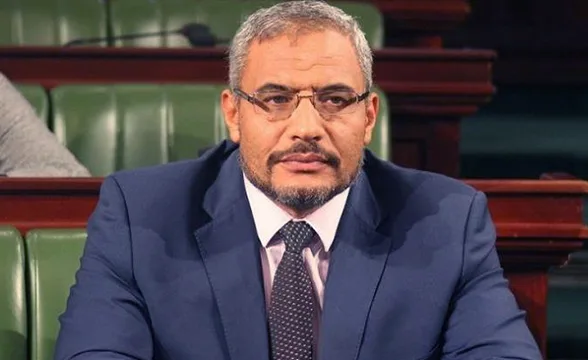
The Freedom for Tunisia Observatory is following with concern the decision of political prisoner and Ennahdha Party leading member Sahbi Atig, aged 67, to begin an open-ended hunger strike on Tuesday, September 29, in protest against the prison administration’s refusal to allow him direct family visits without physical barriers. Concerns over his health are mounting as the strike continues.
His wife, Zeineb Mraihi, reported following her visit on Friday, October 2, that Atig had submitted a request to be allowed direct visits with members of his family, but that his request had been rejected. This prompted him to begin a hunger strike, which he insists on continuing until his demand is met.
According to his wife, Sahbi Atig showed signs of exhaustion during the visit and had difficulty speaking. He also informed her that he would continue his hunger strike and that he refused to be transferred to hospital should his health deteriorate, insisting on his demand for direct family visits.
These developments raise additional concerns given Atig’s age and the impact of previous hunger strikes on his health. His wife recalled that in 2023, he undertook a 54-day hunger strike in protest against his arrest, which she confirmed had lasting consequences for his health.
On June 20, 2025, the Criminal Chamber of the Ariana Court of First Instance sentenced Sahbi Atig to 15 years in prison in a case involving charges of forming a criminal association for the purpose of money laundering, unlawfully possessing foreign currency, inducing a person to give false testimony, and participating in the concealment of evidence of a crime before its discovery by the authorities. On December 31, 2025, the Tunis Court of Appeal upheld the 15-year prison sentence.
Atig’s family and defence team have consistently challenged the basis of the case and the circumstances of his prosecution, maintaining that the proceedings were based on testimony that was subsequently retracted and that he had no connection to the funds at the centre of the case.
Atig also faces another sentence in the so-called “Conspiracy Against State Security” case. He was initially sentenced to 13 years in prison, before the Court of Appeal reduced the sentence to 10 years, in addition to five years of administrative supervision.
The combined prison sentences imposed on him in the two cases therefore amount to 25 years.
Position of the Freedom for Tunisia Observatory:
The Freedom for Tunisia Observatory expresses its grave concern that Sahbi Atig has been driven to undertake an open-ended hunger strike in order to demand direct family visits. It emphasises that maintaining family ties and regular contact with relatives are essential rights that must be guaranteed to persons deprived of their liberty and should not be subject to arbitrary or unjustified restrictions.
The Observatory stresses that the United Nations Standard Minimum Rules for the Treatment of Prisoners (the Nelson Mandela Rules) recognise prisoners’ right to communicate regularly with their families and friends, including through visits. Any restrictions imposed on visits must not become an additional means of isolating or exerting pressure on prisoners and their families.
The Observatory considers that the refusal to allow direct visits requires an explanation of the legal and security grounds justifying such restrictions, particularly when this type of visit is available to other categories of prisoners. It emphasises that visiting arrangements must be governed by clear, objective and non-discriminatory criteria and must not result in certain prisoners being subjected to more severe restrictions without legitimate and proportionate justification.
The Observatory also condemns the fact that a 67-year-old detainee has been driven to risk his health by undertaking an open-ended hunger strike simply to demand direct contact with his family. It calls on the prison administration and the General Directorate of Prisons and Rehabilitation to address the underlying cause of the crisis and respond to legitimate demands rather than allowing the situation to deteriorate to the point of threatening his safety.
The Observatory emphasises that, throughout Sahbi Atig’s deprivation of liberty, the Tunisian authorities bear responsibility for protecting his life and physical integrity and ensuring that he receives appropriate and timely healthcare, while respecting his dignity, wishes and rights during the hunger strike.
The Freedom for Tunisia Observatory calls for:
- Allowing Sahbi Atig direct family visits unless there are specific, necessary and proportionate legal grounds preventing them, and disclosing the reasons for the rejection of his request.
- Ensuring that visiting arrangements are applied without discrimination between prisoners and establishing clear and objective criteria that safeguard family ties.
- Monitoring his health regularly and closely throughout his hunger strike, taking into account his age, medical history and the consequences of his previous hunger strike.
- Enabling his family and lawyers to monitor his condition, maintain regular contact with him and be informed of any serious deterioration in his health.
- Refraining from imposing any punitive measures or additional restrictions against him because of his hunger strike or his demands for rights within prison.
- Reviewing the restrictions imposed on family visits for detainees and ensuring their compliance with the Nelson Mandela Rules and international standards governing the treatment of persons deprived of their liberty.