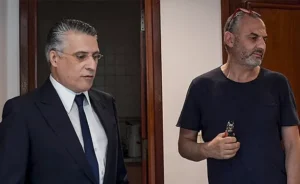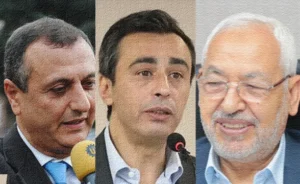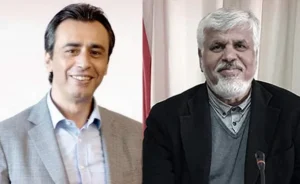
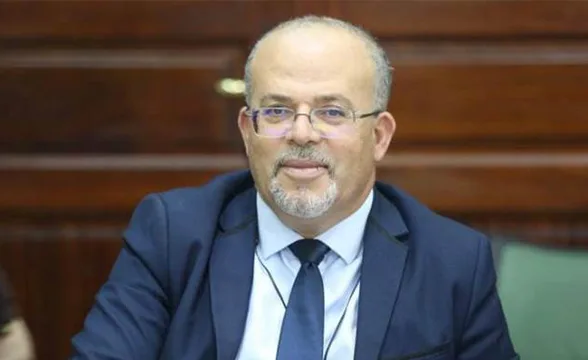
March 1, 2026 – The investigating judge in the Economic and Financial Regulations Department issued a travel ban against lawyers Samir Dilou, Ramzi Ben Deyya, and Mohsen Sahbani, following an investigation into suspicions of money laundering by exploiting the privileges afforded by their positions and professional activities. According to the warrant, the funds originated from tax evasion and other tax irregularities, according to the investigations and tax evasion department.
The investigating judge also ordered the freezing of the suspects’ assets and bank accounts, pending the completion of the investigation.
Case:
This situation follows a series of similar actions taken in recent years against lawyers specializing in defending political detainees, particularly in cases of “conspiracy against state security.”
In February 2023, at least fourteen lawyers were referred for investigation in connection with the same case, including Samir Dilou, Ramzi Ben Deyya, Mohsen Sahbani, Ines Harrath, Saida Akremi, Anwar Ouled Ali, Ridha Belhaj, Mohamed Sami Triki, Malek Ben Ammar, Nasser Harabi, Mounia Bouali, Nizar Toumi, Abdelraouf Abba, and Abdelrazak Kilani. The cases were later expanded to include Islem Hamza, Dalila Ben Mbarek-Msaddek, all based on statements made to the media in connection with the case.
The Freedom for Tunisia Observatory believes that the simultaneous opening of tax and financial investigations against lawyers know for their defense of political prisoners, and the ongoing escalation of legal prosecutions of a political nature, raises new questions about the underlying motives behind these measures.
Freedom for Tunisia Observatory’s Position:
The Freedom for Tunisia Observatory believes that the continued targeting of lawyers with partial financial or tax-related prosecutions in a tense political climate is alarming raises fears that the regime is resorting to the use of judiciary as a tool to exert indirect pressure on lawyers due to their professional activities.
The Observatory also observes that stringent precautionary measures, such as freezing assets and bank accounts and imposing travel bans, have severe consequences for these lawyers’ professional and personal lives and should only be applied in cases based on strong evidence, thoroughly investigated, and justified.
The Observatory emphasizes that targeting lawyers for their professional work or for defending their clients constitutes a fundamental violation of the guarantees of a fair trial, given that the independence of the legal profession is an integral part of the independence of the judiciary itself.
The Observatory warns against the danger of establishing a climate where defending political cases becomes fraught with the risk of personal or financial persecution. Such actions would only serve to deter lawyers and undermine the right of litigants to a free and independent defense.
The Freedom for Tunisia Observatory calls for:
- Lifting the precautionary measures taken against lawyers, particularly the freezing of assets and bank accounts and travel bans.
- Putting an end to all forms of harassment against lawyers due to their professional activities in political cases.
- Limiting prosecutions to a legal framework based on substantive evidence rather than circumstantial evidence or political agreements.
- Ceasing the use of tax and financial files as parallel avenues to pressure lawyers or defame them.