November 8, 2025
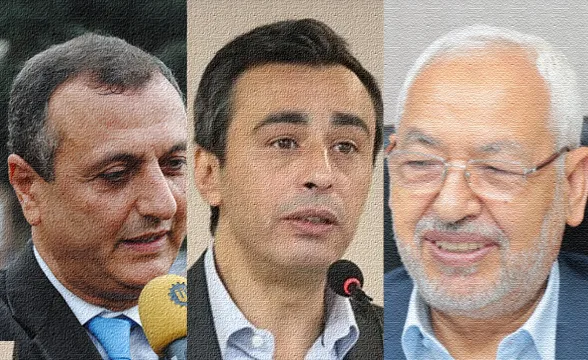
The wave of hunger strikes that began in late October, initiated by constitutional law professor Jawhar Ben Mbarek, who is imprisoned in connection with the so-called “conspiracy against state security” case, continues in several Tunisian prisons.
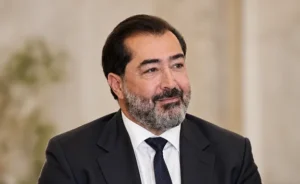
In recent days, prominent political figures have joined the strike, including Rached Ghannouchi (84 years old), head of the Ennahdha Party, and Issam Chebbi, Secretary-General of the Republican Party, in addition to a number of activists and members of Ben Mbarek’s family who have announced a solidarity hunger strike from outside the prison.
According to their defense teams, Ghannouchi and Chebbi began an open-ended hunger strike inside prison on November 7 and 8, respectively, to protest the politicization of the judiciary and their continued detention without a fair trial.
Meanwhile, medical sources in prison report that Jawhar Ben Mbarek’s health has deteriorated significantly after more than ten days of completely refusing food, water, and medication, and that he is now unable to move inside the prison in Belli, Nabeul Governorate.
The recent collective hunger strikes have brought renewed attention to the state of public freedoms within Tunisian prisons and the increasing number of political detainees on hunger strike. International organizations, such as Amnesty International and Human Rights Watch, have deemed the ongoing trials to be lacking in basic safeguards and being used to eliminate political opponents.
The expansion of the hunger strikes from inside prisons to outside, with the involvement of detainees’ families and civil society activists, appears to reflect growing frustration with the stalled legal process and the transformation of the strike into a symbolic means of defending the right to freedom and justice.
Background:
Jawhar Ben Mbarek, Rached Ghannouchi, and Issam Chebbi are being tried in what is known as the “Conspiracy Against State Security 1 and 2” cases, which date back to February 2023 when authorities launched a wave of arrests targeting politicians, lawyers, journalists, and union members on charges related to “attempting to undermine public order” and “conspiring with foreign entities.”
In April 2025, the Criminal Chamber of the Tunis Court of First Instance issued harsh sentences against a number of defendants, of up to 66 years in prison, against more than 40 individuals, including an 18-year sentence for Jawhar Ben Mbarek.
International human rights organizations described the case as a purely political trial lacking the most basic requirements of a fair trial and based on vague charges without concrete evidence.
The Freedom for Tunisia Observatory demands:
- Urgent and independent medical examinations for hunger strikers, and guaranteed continuous medical monitoring within prisons.
- An independent judicial investigation into the conditions of detention and treatment within prison facilities, particularly in Belli and Mornaguia prisons.
- The immediate release of those detained on politically motivated charges, and guarantees of respect for the right to a fair trial.
- An end to the policy of medical neglect and starvation as a means of pressure or punishment against political prisoners, with respect for international standards for the treatment of detainees.